
The Car Was Fine When You Parked It
Months pass. The car sits in the driveway or the lot, untouched and apparently problem-free. You come back, turn the key, and something is wrong. A Winchester Bay towing crew spends a portion of its time responding to exactly this situation, and the root cause is almost always the same: a healthy vehicle that experienced gradual, invisible deterioration while it sat completely still. Those vehicle problems built gradually over days and weeks through a process mechanical systems resist poorly when not in use. Understanding it is practical vehicle maintenance most drivers never consider until they are standing next to a car that will not start.
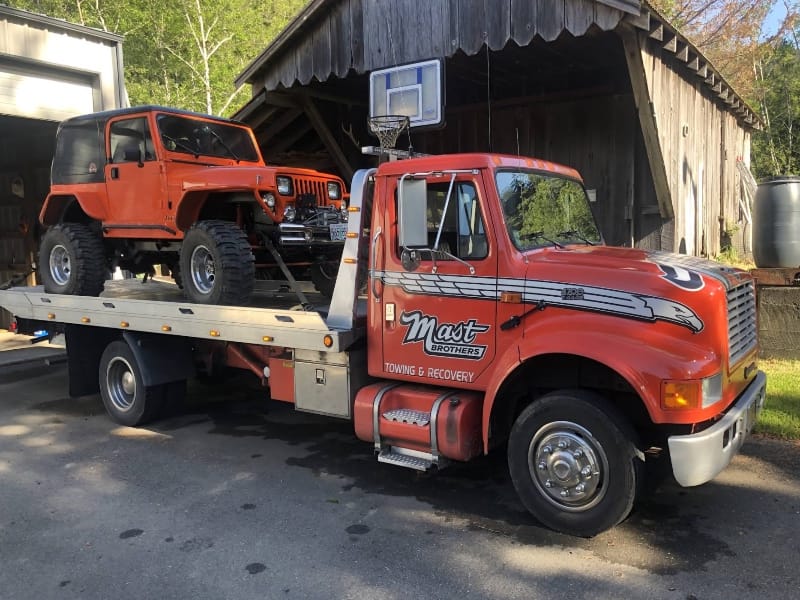
What Happens Beneath the Surface While It Sits
Fuel is often one of the first systems affected. Modern gasoline blends, especially those with ethanol, can begin to lose volatility and absorb moisture within 30 to 45 days in a static or partially filled tank.
Over time, degraded fuel may contribute to gum or varnish deposits in fuel lines, injectors, and intake components. The result can range from harder starting to rough running, especially if the vehicle has been sitting for several months.
Engine oil can also become a concern during storage. Oil that sits without circulation may settle, and its protective additives can weaken gradually over time. Metal surfaces in the engine rely on an oil film for protection, and that film can drain away while the vehicle sits unused. A vehicle stored for three months or more may benefit from an oil change before returning to regular driving.
Where the Damage Shows Up First
In the Engine and the Fuel System
Rubber components in the fuel and cooling systems, including hoses, gaskets, and seals, dry and harden when the engine does not cycle through normal operating temperatures. Hoses that feel pliable can be brittle at fittings where pressure concentrates during a cold start. A Winchester Bay towing call that begins as a no-start situation can expand quickly once the engine turns over and a compromised hose or seal makes itself known under pressure.
At the Wheels and Underneath the Car
Tire pressure drops at roughly one to two PSI per month, and a vehicle resting on the same contact patch for an extended period can develop flat spots that cause vibration at highway speed. Brake rotors rust quickly in humid air, sometimes within 24 to 48 hours of sitting still. Heavier oxidation from weeks of storage can reduce stopping power or cause uneven pad contact until the surface wears clear.
The Battery and Electrical Systems
Every modern vehicle carries parasitic electrical loads from computers, security systems, and clocks that slowly drain the battery even when nothing is running. Without a trickle charger, most batteries fully discharge within six to eight weeks. Getting a vehicle with a deeply depleted battery back to reliable service often requires a full replacement rather than a recharge. Winchester Bay towing responses to stored vehicles identify dead batteries as the leading single cause more consistently than any other storage problem.
The most common Winchester Bay towing calls from stored vehicles involve:
- Completely discharged batteries that will not accept a meaningful charge
- Flat-spotted or underinflated tires that cause pulling or vibration at speed
- Rusted brake rotors that reduce stopping power or cause the brakes to grab
- Degraded fuel that prevents starting or causes rough, uneven running
- Dried or cracked rubber components in the cooling and fuel systems
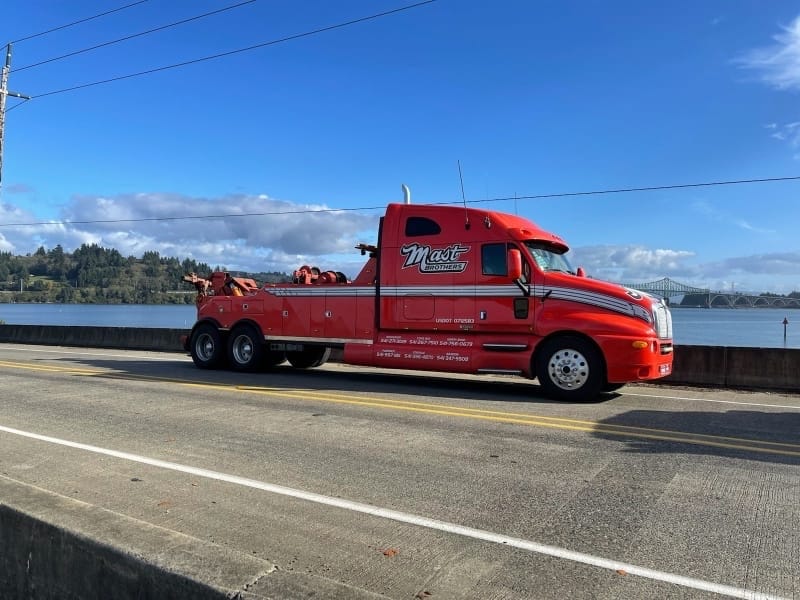
Mast Brothers: Your Winchester Bay Towing Team When Storage Surprises You
Mast Brothers has served the Coos Bay area since 1969, and our Winchester Bay towing operators have seen every variety of storage-related breakdown across five decades in this business. With 28 light, medium, and heavy wreckers and WreckMaster-certified operators on every heavy recovery call, we handle everything from a battery-related pickup in a driveway to a full recovery on a vehicle that has not moved in over a year.
When your Winchester Bay towing situation traces back to a car that has been sitting too long, Mast Brothers responds 24/7 through our in-house dispatch center, which is staffed by real people and never an answering machine. Call us and get help from operators who know this coast, this climate, and the problems that come with both.
FAQ
What causes surface rust on brake rotors, and is it a safety concern?
Brake rotors are made of cast iron, which oxidizes quickly when exposed to moisture and air. Even a single rainy night can leave a light rust layer on a rotor surface. Light surface rust is not a safety concern and typically clears after a few normal stops. Thicker rust from extended storage can reduce braking effectiveness until the surface wears through, which is worth checking before any highway driving after a long storage period.
How quickly does gasoline go bad in a vehicle’s fuel tank?
Conventional gasoline begins to degrade noticeably within 30 days and significantly within 60 days. Ethanol-blended fuel breaks down faster because ethanol absorbs moisture from the air, which accelerates oxidation and phase separation in the tank. A fuel stabilizer added at storage time slows this process considerably and can extend usable fuel life to several months.
Can a completely discharged battery be recovered with a jump start?
A jump start may get the engine running, but it does not restore a depleted battery. The alternator charges the battery while the engine runs, but a deeply discharged battery often cannot accept a full charge from an alternator alone and may fail again within hours or days.
Should engine oil be changed before or after a long storage period?
Before. Old oil contains combustion byproducts and moisture that can promote corrosion if left in contact with engine components for months. Starting storage with fresh oil means the engine sits in a cleaner, more protective environment. A second oil change after storage is a reasonable precaution before returning the vehicle to regular use.
How do I check for rodent damage in a stored vehicle?
Inspect the engine bay for nesting material, chewed wiring, or gnawed hoses. Check the cabin air filter housing and any accessible air intake areas. Look under the dash and behind the glove box if accessible. Rodents often target insulation around wiring looms, which can cause electrical faults that range from minor to serious. If nesting material is found, the entire engine bay and accessible undercarriage should be inspected before starting the vehicle.
What is the difference between a battery tender and a standard charger for storage?
A standard charger delivers a fixed current and should be disconnected once the battery is charged to avoid overcharging. A battery tender monitors the battery’s state and cycles on and off to maintain the correct voltage without overcharging. For extended storage, a battery tender is the better tool because it can remain connected safely for weeks or months without damaging the battery.