
A Wrong Stop on the Highway
A loaded truck doesn’t need much time on a soft shoulder before it becomes a recovery instead of a roadside fix. Along the south coast, we see this turn into Coos Bay heavy towing calls more than we’d like. But around here, the wet ground, loose gravel, and narrow shoulders don’t hold weight like many drivers would expect.
Most coastal routes like Highway 101 and 42 were never built with wide breakdown lanes. Shoulders can drop off fast, and rain keeps the ground saturated for long stretches of the year. If the truck still moves, getting to a paved pullout or logging road access point makes the job simpler for any towing crew.
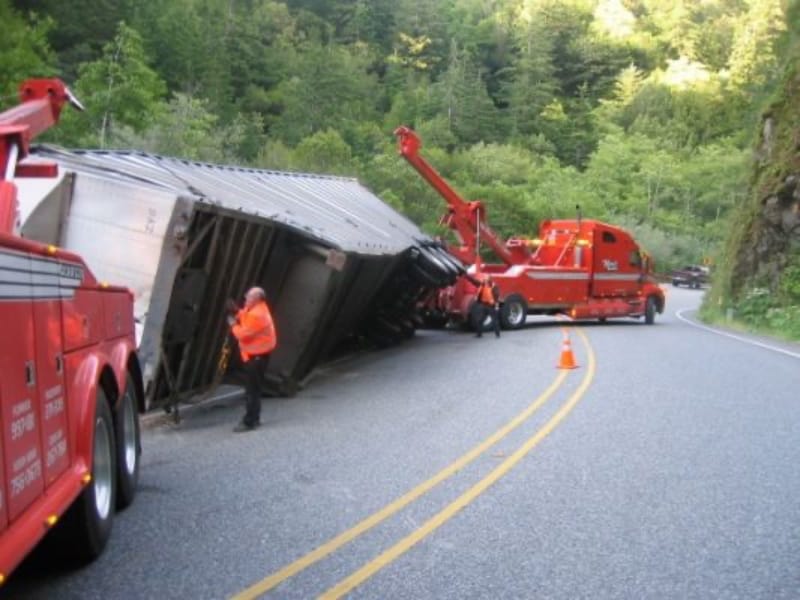
Triangles Forgotten in the Side Box
Skipping triangles still happens more than it should. Hazard lights don’t give enough warning on curved or hilly coastal roads where visibility is limited.
Proper placement is straightforward:
- One triangle about 10 feet behind the truck
- One at 100 feet
- One at 200 feet or more if visibility is reduced
That spacing gives approaching traffic time to react. On coastal highways with higher speeds and tight turns, Coos Bay heavy towing scenes depend on that early warning to keep everyone out of the lane.
Trying to Get the Truck Going Without Help
Working without proper support
Drivers often try to handle breakdowns themselves before calling for help. On flat ground in dry conditions, that can work. On the coast, conditions are rarely ideal.
Moisture, uneven surfaces, and limited shoulder space increase the risk. During Coos Bay heavy towing calls, we factor in ground stability and traffic flow before starting any repair or recovery.
Equipment limitations show up fast
Most roadside kits aren’t built for loaded commercial vehicles. Basic jacks and tools may not handle the weight or angle of the truck once it’s off level ground.
We bring gear rated for heavy loads, along with stabilization equipment. That preparation is a standard part of Coos Bay heavy towing, especially in areas where the shoulder can shift under pressure.
Underestimating Recovery Time on a Coastal Call
Typical time ranges
Recovery time depends on position, load, and road conditions. On coastal highways, most Coos Bay heavy towing jobs fall into a two to four hour window once work begins.
Shorter jobs happen, but they usually involve trucks already on stable ground. Anything off pavement or at an angle adds time.
What affects the timeline
Several factors slow a job down:
- Traffic control requirements
- Ground conditions
- Load shifts
- Limited working space
Even setting up equipment can take longer along narrow routes. That’s part of why Coos Bay heavy towing jobs tend to run longer than inland recoveries.
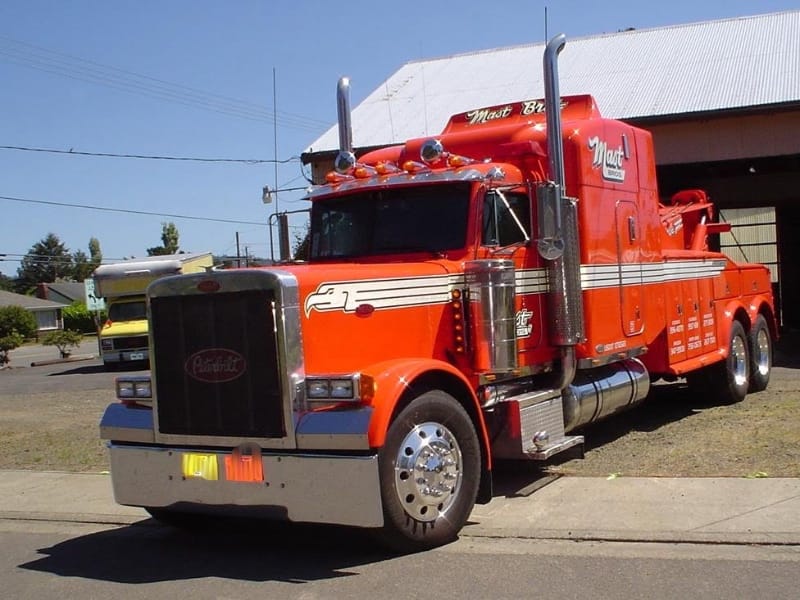
Why Mast Brothers Has Run Coos Bay Heavy Towing Since 1969
Our Coos Bay heavy towing team has been handling coastal recoveries since 1969, and most of our work comes from the same stretches of highway year after year. Certain areas consistently produce calls because of grade changes, tight curves, or unstable shoulders. That familiarity shapes how we approach Coos Bay heavy towing every day.
Our work covers everything from loaded commercial trucks to vehicles stuck in soft ground near the coast. We run heavy wreckers, rotators, and support trucks suited for these conditions. Around here, a truck on the shoulder with hazards on is a common sight, and Coos Bay heavy towing is built around responding to those calls in real conditions.
FAQs
What is the difference between a light tow and a heavy duty tow?
Light duty tows handle passenger cars and small pickups. Heavy duty tows handle anything from a class 7 box truck up to a fully loaded tractor trailer or motor coach. The trucks themselves cost three to five times more and use much heavier rigging.
How fast can a tow truck reach me on a remote highway?
Remote highways often add thirty to sixty minutes to the response time of a busy interstate. Local operators tend to be faster than national clubs because the truck is closer. Always give an exact mile marker or cross street to shave off backtrack time.
Can a tow truck pull my rig out of mud or sand?
Yes, given the right gear. A heavy rotator with multiple winch points can handle most stuck in the soft stuff calls. The work is more involved than a flat shoulder pull and usually adds an hour or two to the bill.
Will I have to ride along in the tow truck cab?
Most operators have a passenger seat in the wrecker for that reason. Some companies will not allow a ride if the recovery is dangerous or insurance limits it. Confirm the policy when you call.
What happens to my truck after the tow?
Most drops are at a repair shop, the company yard, or an impound lot if law enforcement is involved. The destination needs to be confirmed before the wrecker leaves the scene. Keep the storage receipts for insurance.
How can a fleet reduce breakdown calls?
Pre trip inspections, scheduled maintenance, and tire pressure logging cut breakdown rates more than anything else. Driver training on shoulder safety also reduces the cost when something does break. Most fleet failures come from small items left for next week.