A Tow and a Recovery Are Not the Same Job
Every tow involves picking up a vehicle and moving it. A recovery picks up a vehicle that may be entangled, sitting at an angle, or resting on damaged frame rails. The two jobs look similar from the roadside, but the approach and the risk are fundamentally different. In a Coos River Hwy accident recovery, the operator’s first responsibility is reading the vehicle before making contact, not after.
How Vehicles Sustain Damage After the Crash
Treating an accident vehicle like a breakdown call is where secondary damage happens. Loading a structurally compromised vehicle from the wrong attachment point can deepen frame damage. Pulling a vehicle with locked or seized wheels drags tires rather than rolling them. The crash may be the first event, but a careless recovery can become the second.
Secondary damage on an accident vehicle rarely comes from the tow itself. It starts before the tow: wrong loading method, wrong attachment point, wrong equipment for the vehicle’s condition.
Before agreeing to let any company handle an accident vehicle, a driver or their representative should consider asking:
- Does the operator carry integrated rotator or underlift equipment for non-rolling vehicles
- Does the company work regularly with law enforcement on multi-vehicle accident scenes
- Will the operator document the vehicle’s condition before loading begins
- Is the dispatcher asking about the vehicle’s condition or only about the location
What We Check Before Anyone Touches the Vehicle
Structural Load Points and Rigging Position
The first thing an experienced operator looks at is where the vehicle can safely accept contact. Frame damage, bent subframe rails, or a compromised undercarriage change where rigging can attach without stressing damaged sections. An accident recovery that starts with the right attachment points protects the vehicle through loading and transport.
Fluids, Leaks, and What the Ground Shows
The ground beneath an accident vehicle tells a significant part of the story. Active fuel leaks, coolant leaks, or hydraulic fluid pooling under the vehicle all affect how the recovery proceeds. A fuel-leaking vehicle follows a different sequence than a clean pickup. Those determinations get made before the vehicle is touched.
Drive Train and Rolling Condition
A vehicle with drive axle damage, locked brakes, or deployed parking systems needs different loading equipment than one that rolls. Dragging a non-rolling vehicle across pavement damages tires and suspension components that survived the crash intact. In a Coos River Hwy accident recovery, knowing the rolling condition before loading matters as much as the rigging choice.
Our operators complete a walk-around and condition check before loading begins on every accident call. A Coos River Hwy accident recovery handled this way delivers the vehicle to the shop as it left the scene.
Call us for a Coos River Hwy accident recovery and describe what you observe at the scene. Fluid leaks, wheel damage, and direction of impact all help us dispatch the right equipment. That information puts the right equipment on the truck before we leave the yard.
Mast Brothers: The Coos River Hwy Accident Recovery Operator Oregon Has Relied on Since 1969
Mast Brothers has handled Coos River Hwy accident recovery calls since 1969. Our fleet of 28 light, medium, and heavy wreckers reflects over five decades of knowing what accident scenes require. Family-owned since 1969, we serve Coos Bay, North Bend, Reedsport, Florence, Coquille, Myrtle Point, Bandon, and Elkton with 24/7 dispatch.
Every operator on our team holds certification from the Towing and Recovery Association of America. Mast Brothers employs the only WreckMaster-certified operators within a 75-mile radius. When a Coos River Hwy accident recovery call comes in, experience and equipment arrive together. Call us any time.
FAQ
What causes secondary damage during a vehicle recovery?
Secondary damage typically comes from improper rigging, wrong attachment points on a structurally compromised vehicle, or dragging a non-rolling vehicle across pavement. It can also come from loading a vehicle with active fluid leaks before the cause is identified. Secondary damage is largely preventable with the right assessment before recovery begins.
How do I know if my vehicle needs a rotator or a standard wrecker after an accident?
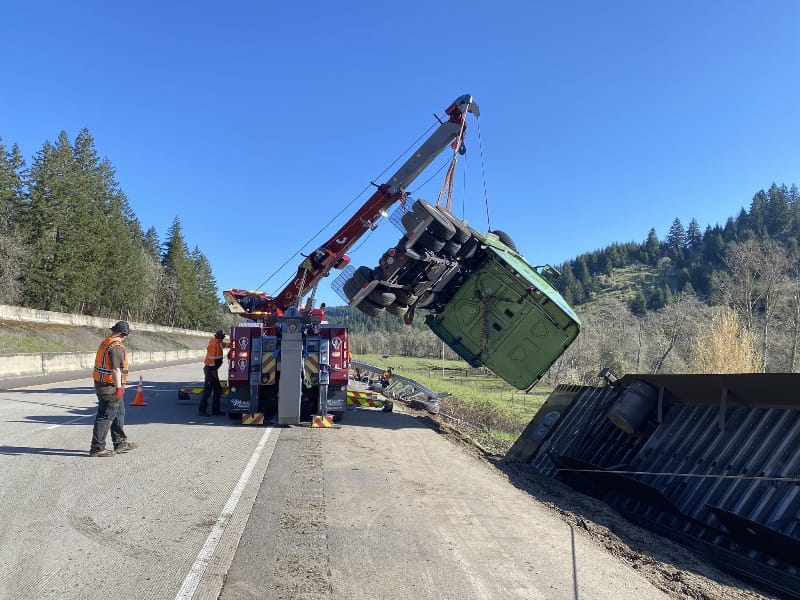
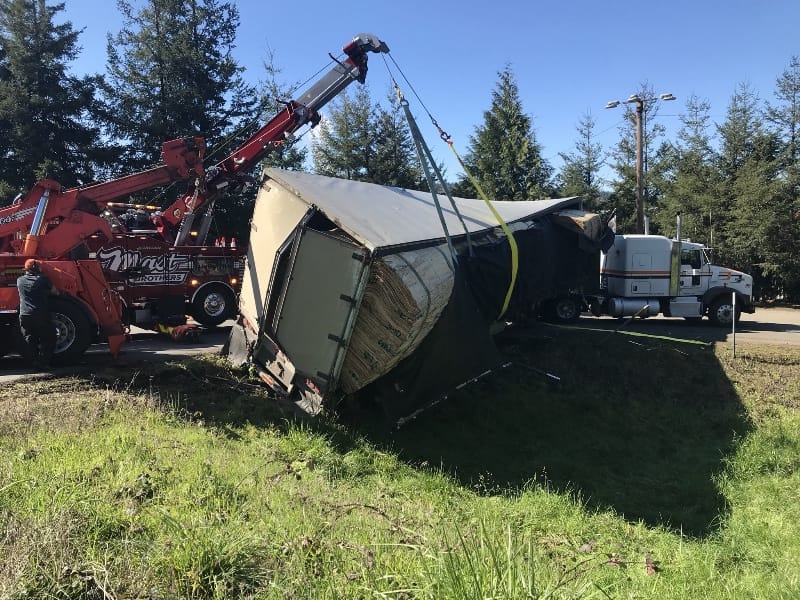
A standard wrecker handles vehicles that are upright, relatively accessible, and can accept conventional rigging. A rotator is used for overturned vehicles, those in difficult positions, or loads that require a controlled lift and swing to avoid additional damage. The operator’s assessment of the vehicle’s position and structural condition determines which is appropriate.
Can a vehicle driven away from an accident scene still need a professional inspection before use?
Yes. A vehicle that appears drivable may have sustained suspension, steering, or frame damage that is not obvious until weight or steering load is applied. Any impact significant enough to deploy airbags or cause wheel damage should be inspected before regular use, even if the vehicle moved under its own power after the crash.
Who decides where an accident vehicle is towed?
In most situations, the vehicle owner has the right to specify the destination within a reasonable distance. In some cases, law enforcement directs vehicles to a designated rotation lot. Knowing your preference before you need it and communicating it clearly to both the dispatcher and the responding officer prevents the vehicle from ending up somewhere inconvenient.
What should I do if I disagree with how the tow operator is handling my vehicle?
Speak up before the vehicle is moved, not after. A reputable operator will explain their approach and address concerns before loading. If you have specific instructions from an insurance company or body shop, communicate those at the time of the call and confirm them when the operator arrives.
Does the time of day affect how an accident recovery is handled?
The physical process is the same regardless of time. Night recoveries require additional lighting and sometimes lane control coordination, which is why working with a company experienced in roadside operations matters. In-house 24/7 dispatch ensures the right information reaches the operator before they leave for the scene.