The Tire That Kept Shredding
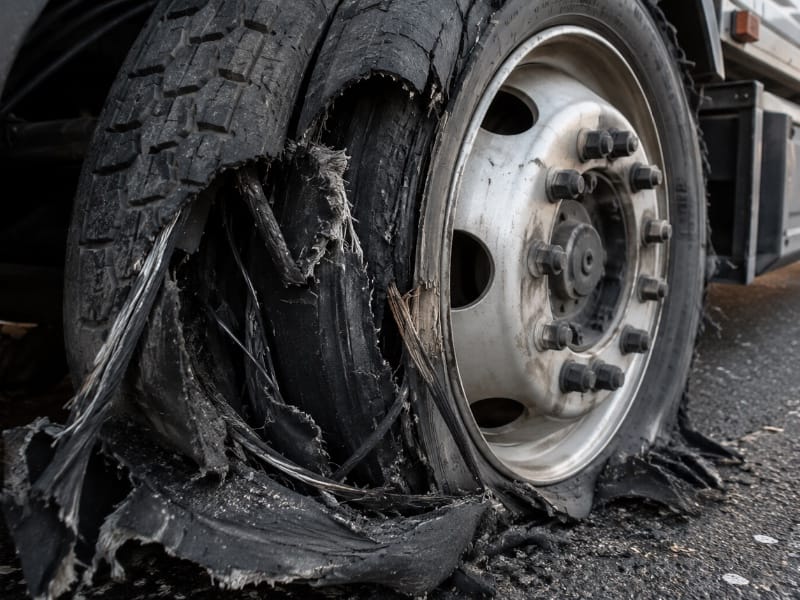
Most drivers know the sound of a tire letting go. On a loaded semi, that sound can mean a lot more than bad rubber. Shredded tire pieces can tear mudflaps, air lines, brake parts, wiring, and fenders before the driver gets fully stopped. That is how a roadside tire call becomes a US-101 semi towing job.
The Reasons Why
Most blowouts come from heat, low air, worn casings, road debris, or too much weight on the tire. A tire that is ten pounds low can flex, build heat through the sidewall, and fail with little warning. Long grades and heavy loads make it worse. On US-101 between Coos Bay and Reedsport, we see tires that looked fine at the last stop come apart before the next one.
What the Driver Should Do When the Tire Blows
A steer tire blowout can pull hard, while hard braking can make a loaded trailer push or sway. Hold the wheel steady, ease off the throttle, and move toward the shoulder only when there is room. Once stopped, turn on the flashers, set triangles if it is safe, and stay clear of traffic. Dispatch needs the nearest landmark, travel direction, failed tire position, trailer type, load status, and whether the truck still has air pressure.
What Not to Do After the Blowout
Do not keep driving on a shredded tire. Rubber can wrap around the axle, tear into wiring, rip through fenders, damage air lines, or create enough heat to start a fire. We have seen drivers limp farther toward a wider pullout and turn one tire failure into brake, wheel, and body damage.
A short list helps in the moment:
- Do not slam the brakes
- Do not yank the wheel
- Do not drive on loose rubber
- Do not guess on brake damage
- Do not stand near live traffic
- Do not trust a soft shoulder with a loaded truck
On US-101 semi towing calls, the most expensive damage often happens after the tire fails. Stopping early usually saves money.
Why Some Blowouts Need More Than a Tire Change
A clean drive tire failure may only need a spare and a service truck. A steer tire blowout with suspension damage, a torn fender, or a severed brake line needs a different response. If the rim is bent, the hub is cracked, or the brakes will not release, the truck should not move under its own power.
We also look at shoulder width, traffic speed, cargo, and the next place the truck can go. A loaded refrigerated trailer cannot sit on the shoulder for hours while parts are located. Sometimes we move the whole combination to a safer spot before tire work starts. Sometimes the tractor moves first and the trailer waits for another unit. On US-101 semi towing calls, the load often decides the plan.
Damage That Shows Up After the Tire Is Gone
Shredded rubber does not disappear cleanly. It can wrap brake drums, pull airline fittings loose, rip wiring harnesses, shred mudflaps, and knock out ABS sensors. A truck rolling on a bare rim for even a short distance can grind through the wheel, crack the hub, or bend the spindle.
When we arrive, we check tire position, brake air, wheel-end damage, shoulder conditions, and traffic flow before we hook up. Steer tires usually point us toward steering or suspension damage. Drive tires often mean fender, air line, mudflap, or brake trouble. With US-101 semi towing, that first inspection tells us if the job is a tire call, a tow, or a heavier recovery.
Mast Brothers Towing & Recovery Handles US-101 Semi Towing After Tire Failures
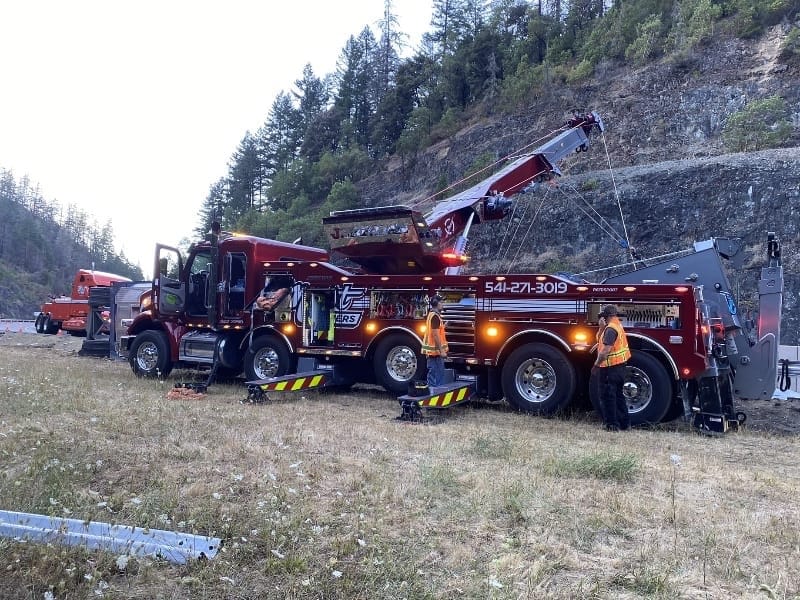
Mast Brothers Towing & Recovery has handled US-101 semi towing since we bought our first heavy-duty wrecker in 1980. We started as a body shop in 1969 after three brothers saw customers paying too much to get cars towed in for repairs. More than fifty years later, we operate 28 wreckers and serve Coos Bay, North Bend, Reedsport, Florence, Coquille, Myrtle Point, Bandon, and Elkton.
Our dispatch center runs day and night, and our WreckMaster certified operators know what to check when a blowout damages brakes, rims, air lines, or cargo plans. On US-101 semi towing calls, we explain the next step before we move the truck. A blown tire may start the problem, but the right response keeps it from becoming a longer repair, a stuck load, or a dangerous stop on the shoulder.
FAQs
What should a semi driver do first after a tire blowout?
Hold the wheel steady and avoid hard braking. Ease off the throttle, keep the truck straight, and move toward the shoulder only when there is room.
Can a blown tire damage air lines or brakes?
Yes. Shredded rubber can hit air lines, brake hoses, wiring, mudflaps, and nearby fittings. If the truck cannot build or hold air, it should not keep moving.
Is a tire change enough after a semi blowout?
Sometimes. A clean tire failure may only need roadside tire service, but rim damage, brake problems, or suspension damage can require towing or recovery.
Why should drivers avoid limping to the next pullout?
Driving on loose rubber or a bare rim can make the damage much worse. It can grind the wheel, bend parts, tear wiring, or create heat near the brakes.
What details should a driver give dispatch after a blowout?
Share the nearest landmark, travel direction, failed tire position, trailer type, load status, and visible damage. Photos help the towing company choose the right response.
Can a loaded trailer change the recovery plan?
Yes. Cargo weight affects how the truck can be moved, where it can be taken, and whether the tractor and trailer should stay together. A loaded trailer may also limit roadside repair options.