
Wood Chips in the Creek and a Long Way Up
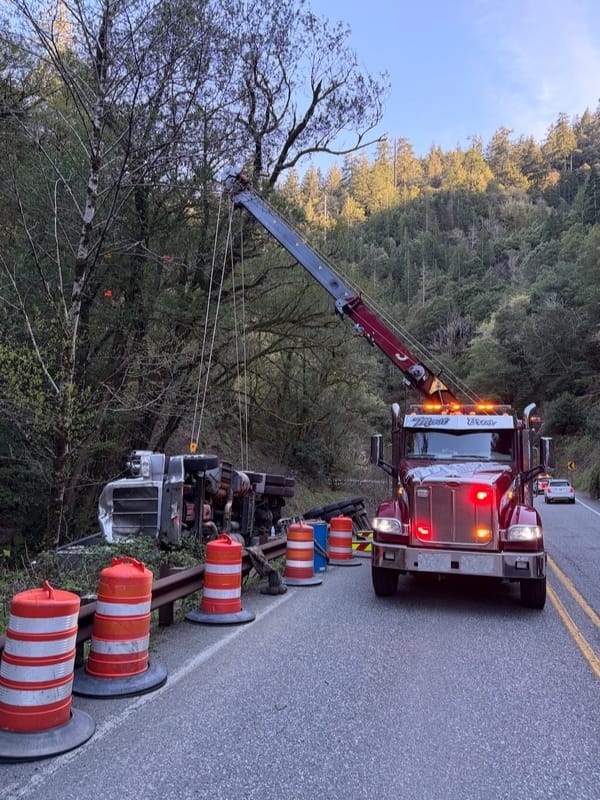
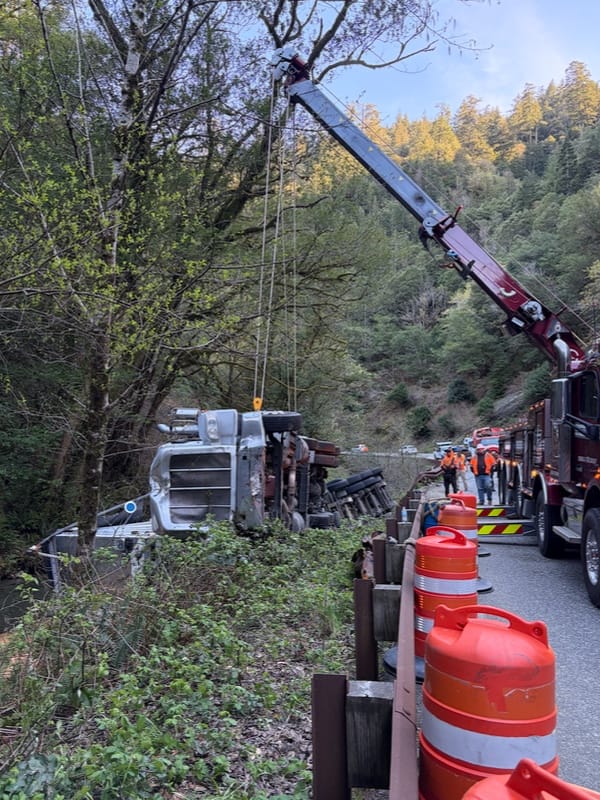
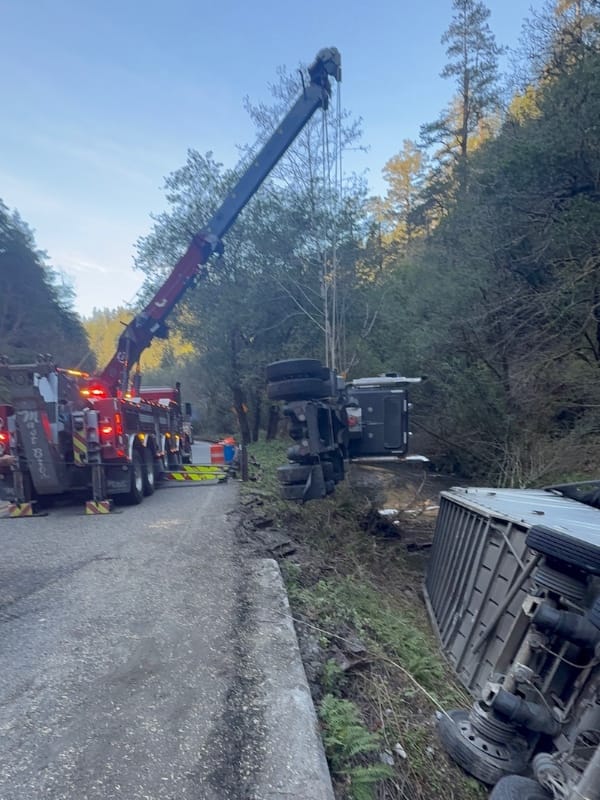
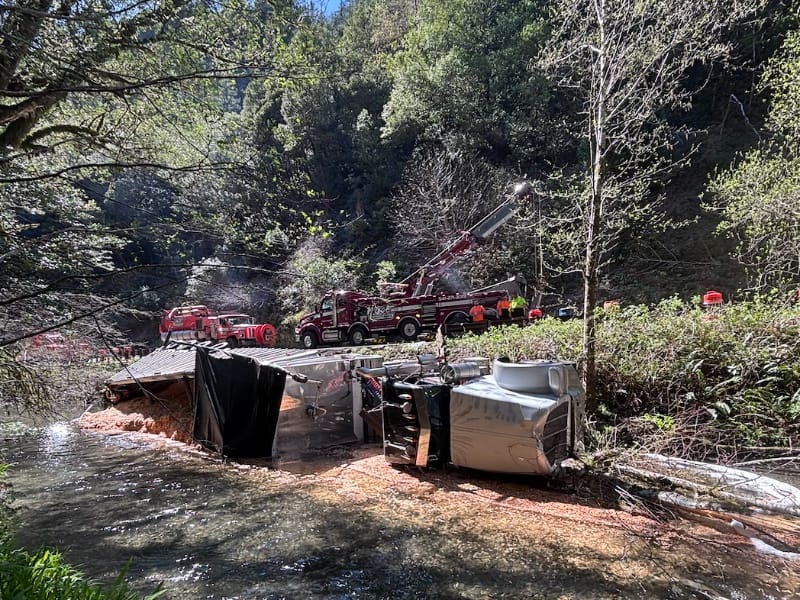
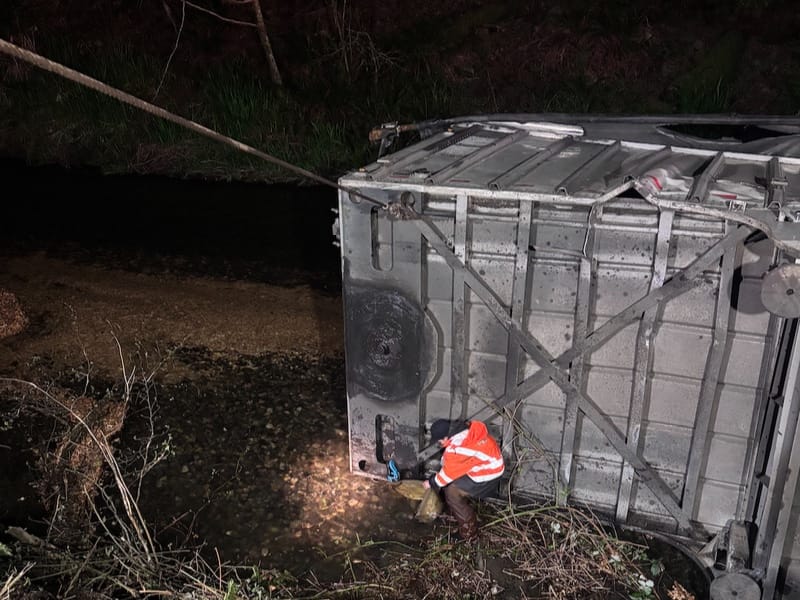
The load was wood chips, but there was nothing light about this wreck. When we got the call for this Gold Beach tractor-trailer recovery on Highway 101 North near milepost 307, we assumed it would be another truck that had slipped off the shoulder and needed a pull back onto the road. Pretty standard for that stretch near Humbug Canyon. Then we got there, looked over the guardrail, and immediately realized this one was in much, so much deeper. The trailer had gone through the rail (!), dropped over the retaining wall, and landed 15 to 20 feet down in the creek.
By the time we climbed down to it, wood chips were floating in the water and the tractor was buried nose-first in the creek. The whole combination weighed around 105,500 pounds and sat twisted below the road where you could barely even see it from the shoulder. Oregon DOT and Oregon State Police already had one lane shut down, and honestly, we knew right then this was going to take the rest of the day. The tractor sat nose-down in the creek with fuel and oil starting to leak into the water. The trailer was twisted against the slope below the roadway. From the shoulder, you could barely see the back end of it through the brush.
Keeping Fuel Out of the Creek
We sent a 30-ton heavy wrecker, a 60-ton rotator, and a vac truck. Six of us worked the call. One operator stayed with the heavy wrecker, one ran the rotator, one handled the vac truck, and three more crew members helped pump out the wood chips and work the rigging.
Before we could even think about lifting anything, we had to deal with the tractor sitting in the creek. Oregon DOT wanted the tractor out right away to cut down the chance of fuel and oil getting into the water. We climbed down, pumped both fuel tanks dry, and got absorbent pads around the area. That part took longer than most people would guess.
Pulling the Tractor Back to the Highway
Once the tanks were empty, we separated the tractor from the trailer and rigged it for a straight vertical lift. There was no room to drag it. The bank was steep, the guardrail was bent into the hole, and the retaining wall left us only one angle to work with.
The rotator picked the tractor straight up from the creek and set it onto the shoulder. Fourteen minutes later, we had it back on its wheels. For a semi-truck recovery Highway 101 Oregon job, that part moved fast.
Eleven Hours of Pumping Wood Chips
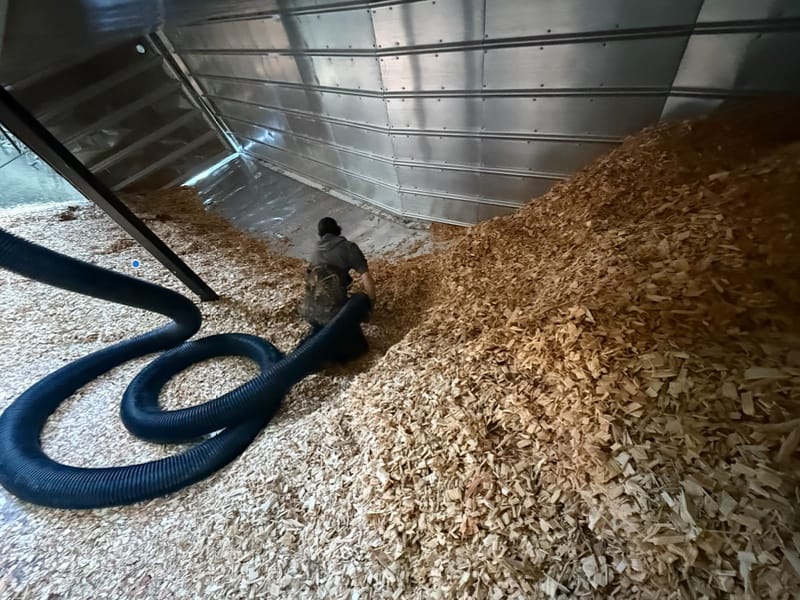
The trailer still sat below the road with a full load of wood chips packed against one side. We brought the vac truck down and started removing the load a little at a time. Most people think the hard part of a Gold Beach tractor-trailer recovery is the lifting. Recovery jobs like this can turn into an all-day cleanup before the wreckers even start to pull. On this one, the wood chips took most of the day.
We pumped chips for 11 to 12 hours and hauled them to a stockpile site. The material had shifted so badly that we could not safely lift the trailer until it was nearly empty. Around milepost 307, traffic kept moving in one lane while we worked. Slow. Tight. A lot of waiting.
Getting the Trailer Out Without Closing the Highway
After the trailer was empty, we rigged it with the rotator and heavy wrecker together. The lift had to clear the shoulder and the concrete retaining wall before we could roll the trailer upright. One wrong move and it would have swung back into the creek.
The trailer came onto its wheels in nine minutes. By that point, the Gold Beach tractor-trailer recovery had already been going for most of the day. That heavy wrecker recovery Gold Beach OR work sounds quick when you say it out loud, but the setup took hours. A rotator recovery Oregon coast call like this is all about the preparation.
Mast Brothers Towing Can Handle Any Gold Beach Tractor-Trailer Recovery From Start to Finish
By the end of the job, we had spent 22 hours from start to finish. Two hours to drive to Gold Beach, two more to get back to Reedsport, then the rest of the time went into pumping wood chips, building the rigging, and working around traffic. We towed both the tractor and trailer back to our Reedsport yard once they were on the road.
Calls like this are why we keep equipment ready for semi-truck recovery Curry County Oregon work. Every Gold Beach tractor-trailer recovery along this stretch of Highway 101 seems to come with a different problem. We see plenty of wrecks along Highway 101, especially north of Gold Beach where the road narrows near Humbug Canyon. Gold Beach tractor-trailer recovery jobs usually involve steep shoulders, wet ground, and very little room to work. A Gold Beach tractor-trailer recovery near Humbug Canyon usually means dealing with the creek, the retaining wall, and traffic backed up in one lane. This one had all three. Later that night, another driver slowed down at the scene and said he had almost gone over the same edge during winter rain.
FAQs
What happens first when a loaded trailer goes off the road?
The first step is checking for fuel or fluid leaks and securing the area. Crews will often stabilize the vehicle before any lifting begins. If there is a spill risk, that gets handled right away. Only after that does the recovery plan start.
Why do some recoveries take so many hours to complete?
It usually comes down to load weight, position, and access. If cargo has shifted or needs to be removed, that alone can take hours. Crews also have to work around traffic and safety restrictions. Most of the time is spent preparing, not pulling.
Can a trailer be lifted without unloading it first?
Sometimes, but not always. If the load is unstable or too heavy on one side, it needs to be removed first. Lifting a fully loaded trailer in the wrong position can make things worse. Crews decide based on balance and ground conditions.
How do operators keep traffic moving during a recovery?
They plan the setup to use as little roadway as possible. Equipment is positioned carefully to keep at least one lane open. Timing also matters, especially on busy roads. Communication with traffic control helps avoid full closures.
What kind of equipment is used for heavy recoveries?
Large wreckers and rotators are common for big jobs. Rotators can lift straight up, which helps in tight or steep areas. Support trucks may also be used to remove cargo or assist with rigging. The setup depends on how the vehicle is positioned.
Is it possible to recover a truck without causing more damage?
In many cases, yes, but it depends on how the vehicle landed. Careful rigging and controlled lifting help reduce additional damage. The goal is to move it as cleanly as possible. Some damage is unavoidable in severe situations.