
Why Vehicles Get Stuck in Sand
Driving on coastal sand looks simple from the driver’s seat, yet the ground underneath behaves in ways that surprise people. Loose sand shifts under the weight of a vehicle, and tires sink quickly once momentum fades. A short stop for photos or a slow turn near softer sand can leave a vehicle sitting lower than expected. Drivers often call our towing team for Bandon off-road recovery after their tires spin and dig deeper with each attempt to move forward.
Sand traps vehicles by reducing traction and allowing the wheels to carve down instead of pushing forward. Beach terrain also changes daily due to tides, wind, and vehicle traffic. Areas that appear firm in the morning may soften dramatically later in the day. Many drivers discover too late that standard road habits do not translate well to sand driving. Heavy acceleration buries tires, tight turns carve deep grooves, and sudden stops reduce momentum that keeps a vehicle moving over loose ground.
Common Sand Driving Mistakes
We regularly see a few habits that lead vehicles straight into the sand.
- Stopping in loose areas with little momentum
- Accelerating too hard and digging deeper ruts
- Turning sharply in soft sand
- Parking near dunes where sand shifts constantly
- Driving too close to soft tide zones
Small decisions like these quickly lead to vehicles resting on their frames instead of their tires.
How Beach Recoveries Work
Beach recoveries require patience and careful planning. Sand behaves differently from pavement or gravel, so every movement must keep the vehicle from sinking further. When we perform the recovery, we evaluate how the vehicle sits in the sand before beginning the pull.
A winch pull often works best for beach situations. The recovery vehicle stays on firmer ground while the cable guides the stuck vehicle back toward stable terrain. Controlled pulling keeps tires from spinning and prevents the vehicle from digging deeper during recovery.
Some beach recoveries involve repositioning vehicles gradually. A slow pull, slight steering adjustment, and careful movement help guide the vehicle back onto compact sand. Our goal always focuses on restoring traction and moving the vehicle to ground where it can drive again.
Why Sand Changes Recovery Conditions
Beach terrain changes hour by hour. Wind pushes loose sand into new shapes and vehicles create tracks that soften surrounding ground. Tide movement also saturates lower areas, creating patches where vehicles sink quickly.
These shifting conditions influence every Bandon off-road recovery call we handle. The angle of the pull, the firmness of surrounding sand, and the vehicle’s position all determine how we begin. Even small changes in terrain can alter how a vehicle moves during recovery.
Drivers often feel surprised by how quickly sand traps a vehicle. One minute the tires roll across the beach and the next minute the frame rests against packed sand. Understanding these conditions helps drivers avoid situations that require a recovery.
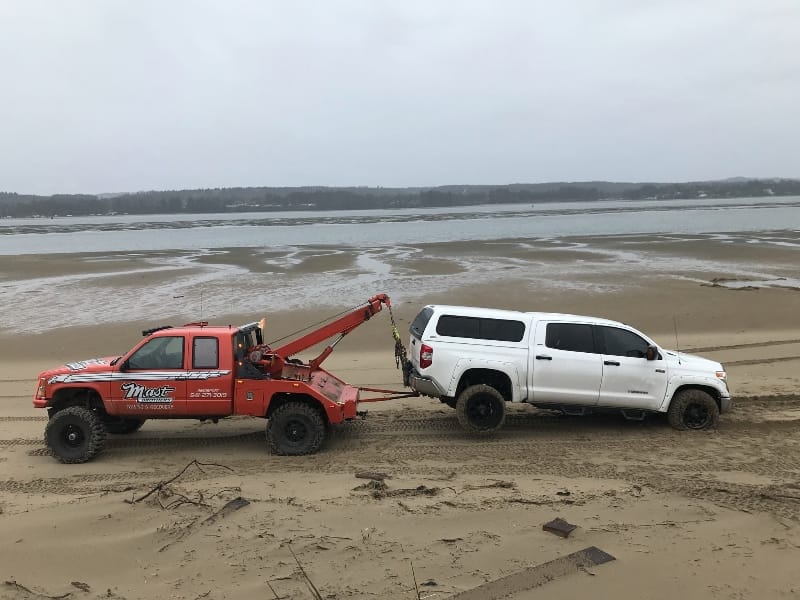
Mast Brothers Towing Never Backs Down From A Bandon Off-Road Recovery
Coastal terrain around Bandon brings unique challenges for drivers exploring beaches and dunes. At Mast Brothers Towing, we regularly assist drivers who need Bandon off-road recovery after vehicles settle into loose sand. Our team works throughout the coastal region where beach access and dune driving attract visitors and locals alike.
Sand recoveries often involve vehicles stuck near dunes, parking areas, and shoreline access points. Our trucks respond to Bandon off-road recovery calls across the coast and surrounding areas. Drivers rely on Mast Brothers Towing for Bandon off-road recovery when vehicles become trapped in soft sand or unstable terrain.
Beach environments require careful planning and controlled pulling to move vehicles back onto firm ground. We respond to Bandon off-road recovery calls with equipment prepared for coastal terrain and changing beach conditions. Mast Brothers Towing provides dependable Bandon off-road recovery support for drivers exploring the sand around Bandon and nearby coastal access areas.
FAQ
Why do vehicles sink so quickly in sand?
Sand shifts under weight and does not hold tires the way pavement or gravel does. When a vehicle slows or stops, the tires can begin to dig downward instead of rolling forward. As the wheels spin, they push sand away and the vehicle settles deeper.
Should you keep pressing the gas if your vehicle gets stuck in sand?
Spinning the tires usually makes the problem worse. Rapid acceleration digs deeper ruts and lowers the vehicle closer to the sand. Gentle throttle or stopping completely often prevents the vehicle from sinking further.
What should you do immediately after getting stuck on a beach?
Start by stopping the vehicle and stepping out to look at the tires. Check how deep the wheels have sunk and clear excess sand around them if possible. Avoid repeated attempts to drive out if the vehicle continues to dig deeper.
Do certain vehicles get stuck in sand more easily?
Yes. Heavier vehicles and those with low ground clearance often struggle in loose sand. Tire type also matters because highway tires provide less grip on soft surfaces than off road tires.
Is it safe to drive close to the waterline on the beach?
The sand near the water can appear firm but it often changes throughout the day. Rising tides and moisture levels can soften the surface quickly. Drivers should remain aware of tide conditions and avoid parking too close to the shoreline.
How can drivers reduce the chance of getting stuck on sand?
Maintaining steady movement helps tires stay on top of the sand. Gentle turns and moderate speed prevent deep ruts from forming. Many drivers also lower tire pressure slightly to increase surface contact and improve traction.